
A neurological consultation is a comprehensive medical evaluation focused on identifying symptoms and conditions affecting the brain, spinal cord, peripheral nerves, and nervous system. Following a motor vehicle accident, fall, work-related injury, or other trauma, neurological symptoms may develop even when there has been no direct impact to the head.
Patients may experience headaches, dizziness, balance difficulties, memory or concentration problems, visual disturbances, sensitivity to light or sound, numbness, tingling, weakness, sleep disturbances, or other changes in neurological function.
During the consultation, the physician reviews the patient’s medical history, mechanism of injury, current symptoms, and available diagnostic studies and performs a neurological examination. Additional diagnostic testing may be considered when clinically indicated based on the patient’s presentation and examination findings.
Diagnosing Traumatic Brain Injury (TBI)
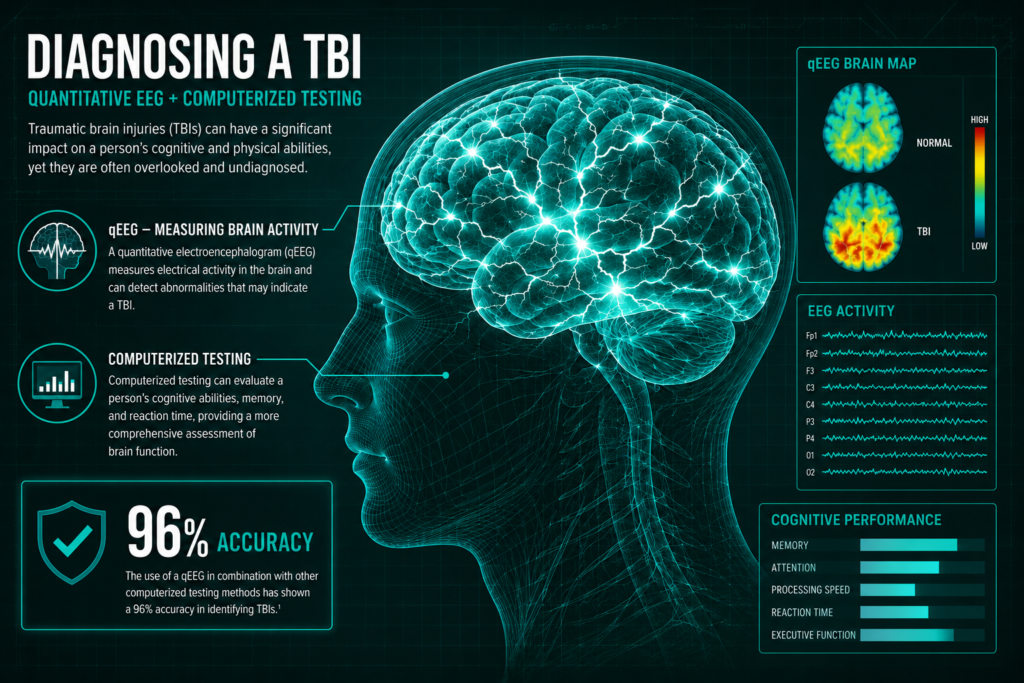
Traumatic brain injury, including concussion and mild TBI, may result from a direct impact to the head or from rapid acceleration and deceleration forces that cause movement of the brain within the skull.
Because symptoms can vary considerably among patients, the evaluation of suspected TBI requires a comprehensive clinical approach. Assessment may include neurological examination, cognitive and functional evaluation, review of available imaging, and other clinically appropriate diagnostic studies.
No single test should be presented as independently establishing or excluding a diagnosis of TBI. Diagnostic findings are interpreted together with the patient’s history, mechanism of injury, symptoms, physical and neurological examination, and overall clinical presentation.
Diagnostic & Neurophysiological Assessment
When clinically indicated, additional testing may be used to evaluate neurological function and investigate specific symptoms or suspected conditions. Depending on the clinical presentation, this may include electrodiagnostic studies, neurophysiological testing, cognitive assessment, or diagnostic imaging.
Electroencephalography (EEG) and quantitative EEG (qEEG), when clinically appropriate, can provide information regarding patterns of brain electrical activity. Findings from these studies must be interpreted within the broader clinical context and should not be represented as stand-alone diagnostic tests for traumatic brain injury.
Additional studies may be ordered or reviewed when medically indicated to evaluate other potential neurological causes of a patient’s symptoms.
Symptoms That May Require Neurological Evaluation
- Persistent or recurrent headaches
- Dizziness or vertigo
- Balance or coordination difficulties
- Memory or concentration problems
- Confusion or cognitive changes
- Visual disturbances
- Sensitivity to light or sound
- Numbness or tingling
- Muscle weakness
- Radiating pain
- Changes in sensation
- Sleep disturbances
- Other persistent neurological symptoms following injury.
Individualized Neurological Care
At CDL Rehabilitation Center, neurological evaluation is integrated within a multidisciplinary approach to injury care. Clinical findings and diagnostic information are used to help establish an appropriate diagnosis, determine whether additional evaluation is necessary, and develop an individualized plan of care based on each patient’s clinical needs.
When appropriate, care may be coordinated with other medical and rehabilitation professionals to address the neurological, musculoskeletal, pain-related, and functional consequences of injury.
From Symptoms to Answers. From Diagnosis to a Coordinated Plan of Care.
If you are experiencing persistent neurological symptoms following an accident or injury, a comprehensive neurological evaluation can help identify potential causes and determine appropriate next steps in your care.